Branding Guidelines: What They Are, Why They Matter & How to Use Them Correctly
Brands speak to people every day. They do that by the use of websites, social media, advertisements, emails and even in-house messages. There are numerous teams and partners dealing with this work. The brand voice might be different in one location to the other without having explicit guidelines. This creates confusion. Trust is gradually lost when individuals observe various colours, tones or messages. There is also weakening of recognition with time.
That is why it is important to have clear branding guidelines. They help in making everyone realize the way the brand is expected to appear, sound, and feel. They maintain the same communication, regardless of the person to be making it. Familiarity will be created through consistency and trust will be created through familiarity.
Branding rules are a one-source-of-truth. They are used to eliminate speculation and minimize errors. Clarity of guidelines is a choice of brands that intend to develop, remain professional, and be memorable. They play a crucial role in building the brand in the long run. Let us discuss everything about branding guidelines in detail.
What Are Branding Guidelines?
Branding guidelines are a set of instructions on how a brand is supposed to be presented to the world. They make people know how to use the brand in the correct manner. These guidelines serve as a guideline one can use without any confusion. They include the appearance of the brand, the way it speaks and the way it acts in various situations.
This involves visual arts such as logos, colours and fonts. It also includes the verbal norms like the voice tone and the mode of communication. The standards of behavior determine the brand-customer and brand-partner relations.
Branding rules are applied within and without the company. They are used by designers, marketers, agencies, and partners daily. We all make the brand in a similar and professional manner by adhering to the same rules.
Branding Guidelines vs Brand Identity
Branding guidelines are the same as brand identity, although not identical. The core and important essence of a brand is its brand identity. It incorporates the brand name, logo, colours, values, personality and the emotion the brand will be having. It defines who the brand is and what brand name is. This aspect is consistent and determines the direction of the brand.
Branding guidelines elaborate on the ways this identity would be applied in the day to day communication. They show how the logo, colours, fonts and tone should be used on websites, social media, ads as well as other materials. They make teams and partners remain consistent. Simply stated, brand identity determines what and branding guidelines determine the how.
What Should a Complete Branding Guidelines Document Include?
A full-detailed branding guidelines document include how a brand is supposed to appear, sound, and even behave in all places. It serves as an effective guide to teams, partners and agencies. It allows confusion to be eliminated. With everyone following the same rules, the brand will remain the same and professional. These principles include graphics, words, and technology. The following are the main points that a good branding guidelines document must contain, as explained in a simple and practical way.

1. Logo Usage Guidelines
This area displays the main logo and other secondary ones. It describes the conditions of using each version. It also determines the minimum size and spacing in order to ensure the logo is always legible and understandable. Background rules are significant as well. These guidelines describe how the logo must be displayed on a light, dark or image background. Wrong examples of use are also included in the guidelines. These demonstrate the items not to be done, such as stretching or alteration of colours. This is an important section since the logo is what represents the brand.
2. Colour Guidelines
This refers to the colours that will be used to represent the brand. The main and secondary colour palettes are listed in this section. It has colour codes such as HEX, RGB and CMYK to ensure consistency of colours both in digital and print media. The hierarchy of usage is present to describe the use of every colour. As an example, what colours should be used as a background, highlights or text. It is also important to be accessible. The use of colours should be user-friendly and easy to read. It has strict colour rules, which discourage the arbitrary selection. They help the brand to appear conversant and balanced. In proper use of colours, the recognition is improved and their brand is easily recalled.
3. Typography Guidelines
Typography guidelines are the rules of how text is supposed to appear in all brand materials. They identify the main font which will be used in the majority of the content and also the secondary font which will be used to help in support. These guidelines help in the clarity and monotony of text. The hierarchy of fonts is also significant. The role and size of headings, body, and captions are clear. This makes content simple to read and scan. The rules of line spacing and alignment enhance balance and comfort. Text must not be congested. Typography rules also describe the usage of fonts in digital and print versions. The settings of screens and printed materials must be different. Easy to understand rules make the text look professional everywhere.
4. Imagery and Graphic Style
This section determines the visual style of graphics and photographs. It describes the kind of graphics that the brand uses and the overall experience that it ought to produce. It also deals with illustration and icon styles. Image principles also define the photo editing guidelines. These are filters, overlays and crop styles. These guidelines help visuals to appear the same across platforms. Unless directed, pictures may appear to be random and unrelated. Specific imagery directives help the brand to narrate a clear visual story. They transport content into a feeling of unity and recognisability, regardless of the location of the people.
5. Brand Voice and Tone
Brand voice and tone rules clarify the way brand speaks. This is where the personality traits of the brand are formulated. It describes the sound of the brand as either friendly, professional, bold or calm. Rules of writing style determine length of sentences and the language used. Tone variations indicate how the voice can vary depending on channels, such as social media or customer support. It also includes words or phrases to use or to avoid using. This is not aimed at being robotic. This is aimed at sounding natural and human. The voice guidelines are clear so that all people talk in a similar manner and yet sound natural.
6. Messaging and Content Guidelines
Messaging guidelines define what the brand wants to say. Key brand messages and value propositions are found in this section. It forms a way in which the brand must discuss its products or services. Positioning statements and taglines are discussed, too. The content structure preferences suggest the manner in which the messages are supposed to be arranged. This may involve the use of headlines or positioning of the call-to-action. There are clear rules of communicating to keep the teams on track. They make the brand message remain well and clear. Regular communication creates credibility and makes an individual learn easily about what the brand entails.
7. Digital and Social Media Usage
Digital and social media usage explains how the brand should appear online. It addresses the logo and banner size of various platforms. Platform-based tone personalization enables messages to sound appropriate on each platform. Social media is owned by hashtag and caption regulations. This part also defines the process of being consistent across the channels. Online advice helps the brands to appear presentable online. They avoid confusion of messages and visuals. Having transparent guidelines, the brand is a household name wherever it is found. To gain a competitive edge in 2026, brands have to use social media channels in the right manner.
Who Uses Branding Guidelines (and Why)?
Branding guidelines are being applied by many people in their day to day business. They are used to develop a visual that fits the brand style by designers and creative teams. They are used by the marketing teams to develop campaigns that remain uniform on all channels. They have content writers that abide by the rules in order to maintain the tone, language and message. They help the sales teams to be candid and articulate the brand at the time of pitching and talking.
The branding guidelines are what external agencies and partners use to learn about the brand within a short time. These guidelines help all the people in the process of portraying the brand positively. Through branding guidelines, teams feel confident and drive a strong and trusted brand by preventing errors and confusion at all levels of touchpoints.
Benefits of Having Strong Branding Guidelines
Effective branding rules help a brand to remain explicit, stable, and professional online. They provide direction to teams and they minimize confusion. Work is simpler and quicker when people are governed by the same rules. Customers and partners have a stronger level of trust in the brand. The following are the major advantages of clear and well defined branding guidelines.
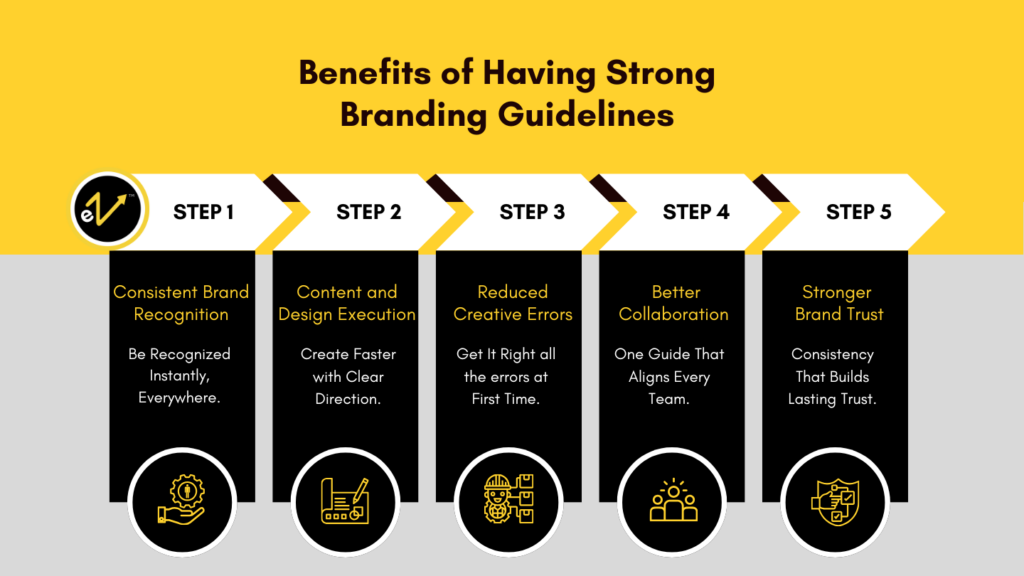
Consistent Brand Recognition
The branding rules are powerful which makes individuals identify a brand immediately. The brand becomes familiar when the colours, logos, fonts as well as tone remain the same. Individuals begin to recollect it effortlessly. This uniformity makes the brand visible in a highly saturated market. It also reduces confusion where the customers come across the brand on various platforms. With time recurring and repeated exposure will develop strong recall. Human beings believe in what they are familiar with. Clarity ensures that all the visuals and messages look and feel like one another. This uniform experience makes the brand always remembered and can be recognized anywhere.
Faster Content and Design Execution
Branding specifications accelerate the team work. It is not necessary to guess or test every time, which is what designers and writers can do. They are already aware of the colours, fonts, and tone to be used. This is time-saving and it prevents delays. Instead, teams are able to focus on making rather than repairing errors. New team members also become fast tracked. Clarity eliminates back and forth and approvals. Projects become quicker when the decisions are pre-defined. Powerful guidelines assist teams to produce content in a very short time, yet maintain quality and consistency. Over a long term, this practice becomes an edge for the brands.
Reduced Creative Errors
Well defined branding policies minimize errors in design and content. These represent what is permissible and what is not. This avoids the wrong colours, wrong logos or off-brand language. This is because teams commit few errors since the expectations are established at the beginning. This also minimizes the rework and the energy wastage. When all people are subject to one set of rules, the output remains clean and professional. The fact that there are fewer mistakes implies that there are fewer corrections and misunderstandings. Good guidelines ensure that the brand does not appear untidy or uneven. They assist in continuity of quality of all materials.
Better Collaboration Across Teams
Branding guidelines help teams work better together. The same does with designers, marketers, writers and sales teams. This brings about coherence and mutual understanding. The work teams are more communicative and do not cause conflict. Everyone is aware of how the brand should appear and what it should sound like. This enables teamwork to be more effective and easier. The external partners also fall into place since they adhere to the same guide. Teamwork will be enhanced when people are working on the same reference. Projects are developed in a smooth manner and with improved outcomes when the teams are collaborative.
Stronger Brand Trust
Consistency builds trust. When brand appearance and sound are similar everywhere, then the people are confident in it. Powerful branding principles contribute to the provision of this uniformity. The customers are aware of the expectations of the brand. This makes the brand trustworthy and professional. When there is open and repeated contact, trust is built. In the long run, this trust will become loyalty. Brands that are familiar and stable are preferred by people. Clear guidelines would contribute to the establishment of such a sentiment on all touchpoints. With strong brand trust signals, it becomes easy to convert from visitors into customers.
Common Branding Guideline Mistakes to Avoid
Most of the brands establish branding guidelines and still commit some of the prevalent errors. As one of the major mistakes, one makes the rules too complicated. Teams do not respect guidelines that appear difficult to adhere to. The other problem is the utilization of outdated guidelines. The brands evolve and ancient rules may lead to misunderstanding.
There are also guidelines that do not have real examples. People cannot use the rules properly without some clear images or examples. Most of the companies fail to provide guidelines to outside collaborators. This results in inconsistency between agencies and freelancers.
Another issue is regarding branding guidelines as fixed documents. They should be reviewed and regularly updated by the brands. Best principles must remain basic, up-to-date, and realistic. This assists in making them sure and steady in usage by everyone.
How Branding Guidelines Help Maintain Brand Consistency
Consistency Across Platforms
Branding guidelines assist the brands to remain similar on all platforms. The same applies to websites, social media, ads, emails and offline materials. The same logo, colours, fonts, and tone are used everywhere in the teams. This eliminates misunderstandings and cross messages. The brand is recognizable when individuals switch platforms. They are aware that they have been in the right place. Consistency also contributes to a quicker work of teams since decisions are already made. It is not allowed to make random changes and personal preference with clear rules. This consistency over time makes the brand stronger. It is easy to identify by people irrespective of where they observe it. Proper branding policies ensure that all platforms are aligned and business.
Unified Customer Experience
Branding policies bring about a seamless and integrated customer experience. Each communication is related, starting with the initial advertisement till the last purchase. At all touchpoints, this voice, style, and message are the same. This will leave the customers at ease and assured. They are aware of what the brand will offer. These guidelines are clear and allow teams to provide similar experience within the departments. The marketing, sales and support are all the same. This minimizes misunderstanding and develops trust. Care and attention to detail are reflected in a single experience. It assists customers to have a good and deep association with the brand.
Long-Term Brand Recall
Branding can be done consistently and this makes the brand long-lasting in the minds of people. Visual messages and images remain consistent, and thus become familiar. The more familiar something is with us, the easier it will be to remember. Branding rules ensure that this consistency persists weeks and years. They cushion the brand against unanticipated fluctuations that leave individuals at a loss. Memory is created through repetition of the same colour, logo and the same tone. Such minor details count in the long run. Good memory keeps the brands on the mind of people when making decisions. Branding guidelines reinforce this long term memory and make the brand consistent, clear cut and recognisable throughout all interactions.
Scalable Branding as the Business Grows
The more the business expands, the more individuals begin to work with the brand. New partners, teams and markets are introduced. Branding policies help in ensuring the brand grows without losing its character. They provide some detailed guidelines that any person can adhere to. This makes the brand maintain consistency even with the expansion in operations. The same brand personality and style are offered in the new markets. The guidelines are also useful in onboarding new members of the team in a short time. The development process becomes easier and more manageable. The brand remains focused and assured throughout the course of development with great guidelines.
When and How Branding Guidelines Should Be Updated
Rebranding or Visual Refresh
Whenever a brand undergoes rebranding or visual refresh, branding guidelines need to be revised. Possible alterations of the logo, colours, fonts, or design imply that there are new rules. Unless the teams continue to work with old guidelines, the brand will appear to be disjointed. New guidelines are updated on what has changed with information given on how the new images are supposed to be used. They help in a transition between the old appearance of the teams and the new one. This minimizes confusion and errors at the period of transition. An aesthetic update will tend to streamline the brand or bring it into line with new objectives. Good updates guarantee that all platforms are updated to the new style. This makes the brand fresh without being cluttered and familiar.
Expansion into New Markets
During the expansion of a brand to new markets, branding rules should be revised with great caution. New territories can possess other cultural expectations, language, or design preferences. The guidelines must describe how the brand is going to evolve without losing its essence. This aids the local teams on what they can change and what should remain unchanged. Lack of a clear guideline causes messaging and visuals to lose their original meaning of the brand. Newer guidelines save the brand against misrepresentation. They likewise assist in enabling external partners to work. When stakeholders work on a clear guideline to expand their brand, they gain better control.
New Digital Platforms
Emerging digital platforms usually demand a revision of branding rules. All platforms have different formats, dimensions of images, and types of content. Directions to be followed should be given on how the brand should be presented in these media. This involves the positioning of logos, usage of images as well as change in tone. In the absence of updates, teams can make guesses or use rules that are not correct. This is facilitated by clear guidance that ensures consistency as requirements of the platform are met. As the digital spaces are changing, brands need to remain dynamic and up to date. New guidelines will make the brand appear well-polished and professional in any place.
Shift in Brand Positioning
Changing brand positioning implies that the brand changes the perceptions of people about it. This can be through a new audience, new values or a new message. It is necessary that branding rules will indicate this change. The tone of voice, messages, and images can be updated. Clear directions assist in making teams realize the new direction and using it properly. They avoid displaying old messages in new campaigns. New directions keep all participants in line with the objectives of the brand. This will guarantee uniformity in communication channels. Powerful refreshments will assist the brand to grow and will enable it to proceed into the future with a clear and confident mind.
Conclusion
Branding guidelines play a key role in building and protecting a strong brand. They determine the appearance, sound and behavior of a brand on all the platforms. This is by establishing a set of rules that help in ensuring that brand identity is not lost due to confusion and inconsistency. Branding rules facilitate uniformity and transparency which aid in recognising and trusting the brand by people.
Branding is also scalable as a business expands using these guidelines. It is possible to take the same direction with new teams, partners, and channels without bringing them down. Clear instructions make the work easier on a day-to-day basis and minimize the mistakes. They make everyone on track and directed towards the same direction. In case you need professional assistance in crafting good and understandable branding guidelines, EZ Rankings – Best Digital Marketing Agency can be your brand partner by offering you professional strategy and implementation.