Social Media Marketing Strategy For 2026

Social media continues to be a critical part of modern digital marketing and remains one of the most effective platforms for building brand awareness, driving engagement, and creating connections with audiences. A well-planned social media marketing strategy helps businesses promote their products or services, strengthen brand visibility, and encourage ongoing interaction with potential and existing customers.
As social platforms evolve, marketers must stay updated with changing trends, technologies, and user behaviour. From AI-driven content and short-form videos to community-led engagement and performance tracking, a strong social media marketing strategy in 2026 requires both adaptability and clear planning. In this blog, we break down the key elements you need to build an effective and future-ready social media marketing strategy, helping your business stay relevant, competitive, and impactful across social platforms in the coming year.
What is a Social Media Marketing Strategy?
A social media marketing strategy is a clear plan that defines how a business or individual uses social platforms to achieve specific goals. It guides every activity, from the type of content you publish and how often you post to how you engage with followers and measure success. A strong strategy helps businesses use platforms such as Facebook, Instagram, LinkedIn, X (Twitter), and TikTok effectively to reach and connect with their audience.
The primary purpose of a social media marketing strategy is to build genuine connections with customers and prospects, strengthen relationships, and increase brand awareness.
An effective social media marketing strategy supports your business goals in several ways:
- Increasing Visibility: A structured strategy helps your brand reach a wider and more relevant audience across social platforms.
- Generating Leads: Sharing valuable and engaging content encourages users to visit your website, explore your offerings, and convert into leads.
- Improving Customer Support: Social media enables fast and direct communication, helping you respond to customer questions and concerns efficiently.
- Building Relationships: Regular interaction and authentic engagement help create trust and long-term relationships with your audience.
- Strengthening Brand Awareness: Consistent content exposure makes your brand more recognisable and memorable over time.

Social Media Marketing Strategies For 2026
The social media world is constantly evolving, and as we move closer to 2026, having a strong and well-planned social media marketing strategy has become essential for every business. With changing platforms, algorithms, and user behaviour, a structured approach is more important than ever. Below is a step-by-step method to help you build an effective and result-driven social media (SMO) strategy for your business.
1. Set Clear and Actionable Social Media Goals
A successful social media marketing strategy starts with setting clear, measurable, and action-oriented goals. These goals should be tailored to your business needs and closely aligned with your overall marketing and growth objectives. Based on your company’s size, industry, target audience, and competitive environment, social media goals may vary.
Across industries, common social media goals often include:
- Increasing brand awareness
- Building an engaged social media community
- Driving traffic to your website
- Generating qualified leads
- Supporting sales and conversions
To ensure these goals are realistic and achievable, they should follow the SMART framework: Specific, Measurable, Achievable, Relevant, and Time-bound.
Rather than setting a vague goal like “increase followers,” aim for a more focused objective such as “grow Instagram followers by 20% within six months” or “increase website traffic from social media by 30% in a quarter.” Clear goals make it easier to measure performance and refine your social media marketing strategy over time.
2. Understand Your Audience with Social Media Insights
Your audience is the foundation of any successful social media marketing strategy. To build content that truly connects, it’s important to understand who your followers are and how they interact with your brand. This can be achieved by regularly reviewing social media analytics and performance data.
Most platforms, such as Facebook Insights, Instagram Analytics, and LinkedIn Analytics, provide valuable information about your audience, including:
- Demographics: Details like age, gender, location, interests, and professional background
- Activity patterns: The days and times when your audience is most active and engaged
- Trending topics and hashtags: Popular conversations and themes your audience follows
- Content preferences: Post formats that perform best, such as videos, images, carousels, polls, or blogs
These insights help you create more relevant and engaging content while refining your social media marketing strategy based on real user behaviour. By understanding your audience’s preferences, tone, and interests, you can ensure your messaging, content style, and platform selection are aligned with what your audience actually wants to see.
3. Content Strategy: A Roadmap for Success
A strong content strategy is essential for attracting, engaging, and converting your target audience. It ensures your content becomes a reliable and cost-effective channel for driving website traffic and generating qualified leads. By following a structured approach to content creation, distribution, and performance tracking, businesses can maintain consistency and achieve maximum impact across social media platforms.
Why Content Strategy Matters
Content forms the foundation of your overall social media marketing strategy. When executed effectively, it helps achieve the following:
- Consistent website traffic: High-quality and relevant content attracts organic visitors who are more likely to engage with your brand.
- Lead generation: Valuable and solution-focused content addresses audience pain points and encourages users to take action.
- Long-term ROI: Evergreen content continues to deliver traffic and conversions over time, making it more cost-effective than short-term campaigns.
With a well-defined content strategy in place, businesses can also expand into other growth opportunities such as social media advertising or sponsored content to extend their reach.
An effective content strategy goes beyond publishing posts. It focuses on creating content that adds value, connects with your audience, and supports your business objectives.
How to Build a Successful Content Strategy
Content Planning and Goals
- Set clear objectives: Define what you want to achieve, such as increased traffic, higher engagement, or improved conversions.
- Understand your audience: Use research and analytics to identify your audience’s needs, challenges, and interests.
- Content pillars: Focus on core topics that reflect your brand expertise and align with audience intent across social platforms.
Content Management System (CMS)
- Invest in a reliable CMS to streamline your workflow, including:
- Content creation and collaboration
- Scheduling and publishing across channels
- Performance tracking and optimisation
Types of Content to Focus On
- Using a mix of content formats helps engage users and support different goals:
- Blog posts: SEO-optimised content to drive organic traffic
- Videos: Short and long-form content for higher engagement
- Infographics: Shareable visuals that simplify complex ideas
- Case studies: Proof-based content that builds trust
- Ebooks and whitepapers: In-depth resources for lead generation
Consistency plays a critical role in content success. A content calendar helps plan themes, posting schedules, and formats while ensuring regular engagement. Tracking performance through analytics allows you to identify what works best and refine your content strategy accordingly.
Businesses that follow a disciplined content strategy can attract steady traffic, generate qualified leads, strengthen brand authority, and build a strong foundation for long-term growth. When done right, your content works as a 24/7 brand ambassador across social media channels.
4. AI and Data Segmentation
AI has become an important part of modern social media marketing. It helps businesses manage their social media activities more efficiently and make better decisions using data. Instead of handling everything manually, AI tools support day-to-day tasks and help marketers focus on strategy and creativity.
In social media marketing, AI is commonly used to schedule posts, suggest hashtags, analyse post performance, track engagement, and identify the best time to publish content. AI tools can also review large amounts of data in real time to show what type of content is working and what needs improvement. This saves time and helps businesses scale their social media efforts more effectively.
AI also plays a key role in audience segmentation and personalisation. By analysing data such as user behaviour, interests, demographics, and interaction history, AI helps divide audiences into smaller, more relevant groups. This allows businesses to share content that matches each group’s preferences, leading to higher engagement and better conversion rates.
How AI Supports Social Media Marketing
AI helps businesses:
- Understand their audience better through data insights
- Deliver personalised content to the right users at the right time
- Predict content performance and improve campaign results
- Reduce manual work and improve efficiency
As social media platforms continue to evolve, integrating AI into your social media marketing strategy helps you stay competitive. It allows you to work smarter, reach the right audience, and achieve stronger results with less manual effort.
5. Keep an Eye on Your Competitors
Keeping track of what your competitors are doing on social media is an important part of building a strong social media marketing strategy. By observing their posts, campaigns, and audience interactions, you can gain useful insights into industry trends and better understand what your target audience responds to.
Engaging with competitor content can reveal valuable opportunities. The people who like, comment on, or share their posts are often potential customers who may also be interested in your products or services. Studying how competitors attract attention, communicate with followers, and maintain engagement can help you improve your own approach.
Monitoring competitors also helps you stay informed about:
- Trending industry topics: Identify popular keywords, hashtags, and discussions that are gaining attention
- Strategy changes: See how competitors adjust their content, formats, or platforms over time
- Content gaps: Spot areas they may be missing and create content that better serves your audience
Regular competitor analysis allows you to refine your social media marketing strategy, respond to market changes faster, and position your brand more effectively. By learning from others while adding your own unique value, you can stay relevant and competitive in your niche.
6. Choose the Right Social Channels
Selecting the right social media platforms is a key part of building an effective social media marketing strategy. Instead of trying to be active on every platform, businesses should focus on channels that best match their goals, target audience, and industry. Not all platforms deliver the same value, so investing time and effort where your audience is most active leads to better results.
Different business types perform better on different platforms. For example:
- B2B businesses often see stronger engagement on platforms like LinkedIn and X (Twitter), where professional networking and thought leadership content work well.
- Ecommerce brands benefit from visually driven platforms such as Instagram, Pinterest, and TikTok, where product discovery and short-form content influence buying decisions.
- Local businesses may see better results on Google Business Profile, Facebook, and community-based platforms that help connect with nearby customers.
By focusing on a few relevant channels, you can create platform-specific content, engage more effectively with your audience, and build a stronger brand presence. It also becomes easier to track performance and improve consistency.
Monitoring competitor activity on these platforms can provide additional insights. Identify which channels they use successfully, observe what type of content performs well, and look for opportunities to improve or differentiate your approach. Staying aware of platform updates and industry trends ensures your social media marketing strategy remains effective and future-ready.
7. Create a Social Media Calendar
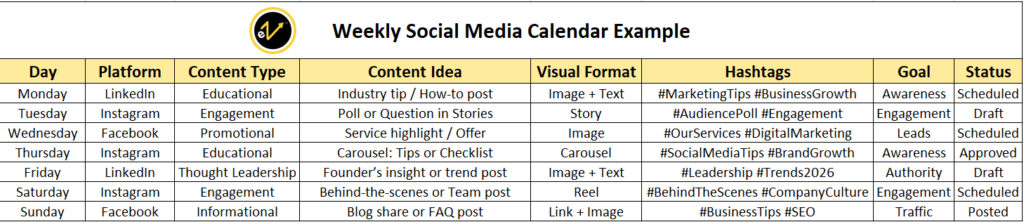
A social media calendar helps you plan content in advance, maintain consistency, and stay aligned with important trends, campaigns, and key dates. It brings structure to your social media marketing strategy by organising what to post, when to post, and where to post, ensuring a consistent brand presence across platforms.
A well-planned calendar also makes it easier to track performance, avoid last-minute posting, and balance different types of content such as promotional, educational, and engagement-focused posts.
Create the Calendar Layout
You can create a social media calendar using tools like Google Sheets, Excel, or social media management platforms such as Hootsuite, Buffer, or Trello. The calendar should clearly outline all essential details, including:
Date: The scheduled posting date
Platform: Where the content will be published (Instagram, Facebook, LinkedIn, etc.)
Content type: Promotional, educational, informational, or engagement-based
Content Idea: A short description, caption idea, or link to the content
Visuals: Links to images, videos, or creative assets
Hashtags: Relevant hashtags to improve reach and discoverability
Status: Drafted, approved, scheduled, or published
Using a social media calendar helps teams stay organised, improves collaboration, and ensures your social media marketing strategy stays consistent and effective throughout the year.
How to Track Social Media Marketing Performance
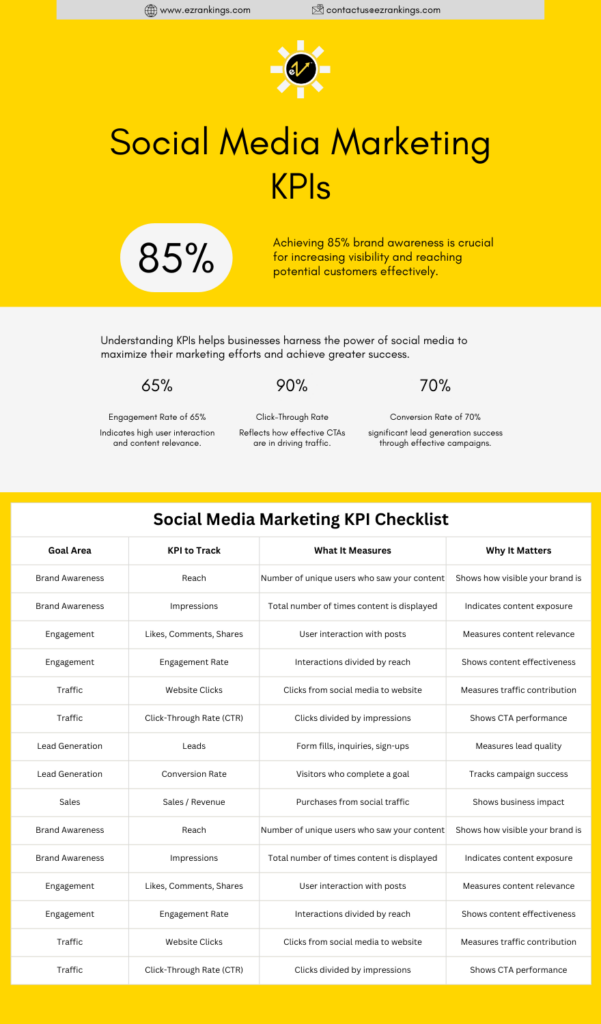
When you invest time and effort into social media, it’s important to know whether it’s actually helping your business grow. Tracking social media performance allows you to understand what type of content is working, where your audience is engaging the most, and how well your social media marketing strategy supports your business goals. Start by reviewing performance on each platform using analytics tools and focus on impactful metrics such as website visits, engagement, leads, and conversions, rather than only likes or follower counts.
Regularly compare these results with your campaign or monthly goals to see what’s moving in the right direction. Pay attention to which posts, formats, or platforms generate the strongest response and try to understand why they perform well. By monitoring performance consistently and making small improvements, such as refining content or adjusting posting times, you can improve results over time and ensure your social media efforts continue to deliver steady and measurable growth.
Key Social Media Features to Boost Your Business
Social media platforms offer a wide range of features that help businesses improve visibility, connect with their audience, and support marketing goals. Using the right features can make your social media efforts more effective and result-oriented.
Live Streaming
Live videos allow businesses to connect with their audience in real time. They are useful for product launches, Q&A sessions, announcements, and events. Platforms like Instagram, Facebook, and LinkedIn support live streaming and help increase engagement.
Stories
Stories are short, temporary posts that usually stay visible for 24 hours. They are ideal for sharing behind-the-scenes updates, offers, quick announcements, and daily activities in a more casual format.
Reels and Shorts
Short-form videos such as Instagram Reels and YouTube Shorts help businesses reach a wider audience quickly. These formats are engaging, easy to consume, and effective for showcasing tips, trends, and product highlights.
Shopping Features
Many social platforms now support in-app shopping. Features on Instagram, Facebook, and Pinterest allow users to browse and purchase products directly, making the buying process faster and more convenient.
User-Generated Content (UGC)
Encouraging customers to share reviews, testimonials, or photos builds trust and credibility. Sharing UGC shows real experiences and helps create a sense of community around your brand.
Polls and Surveys
Polls, quizzes, and surveys encourage interaction while helping businesses understand audience preferences and opinions. Platforms like Instagram, LinkedIn, and X (Twitter) offer these interactive tools.
Scheduled Posts
Scheduling tools allow businesses to plan and publish posts in advance. This helps maintain consistency without needing to post manually every day. Tools like Buffer, Hootsuite, and native platform schedulers are commonly used.
Groups and Communities
Groups on platforms such as Facebook and LinkedIn help businesses build focused communities, encourage discussions, and share valuable insights with a targeted audience.
Messaging and Chatbots
Direct messaging enables quick communication with customers. Chatbots can be used to respond to common questions, share information, and support users throughout their journey.
Analytics and Insights
Built-in analytics tools help track post performance, audience behaviour, and engagement levels. These insights help businesses improve content planning and decision-making.
Start Your Social Media Marketing with EZ Rankings
Now that you understand how a strong social media marketing strategy works—from choosing the right platforms and content formats to tracking performance and using AI-driven insights—the next step is putting it into action with the right partner.
EZ Rankings is a trusted social media marketing company in India that helps businesses turn strategy into results. We work closely with you to understand your brand, audience, and goals, then build and manage a customised social media strategy designed to improve visibility, engagement, leads, and long-term growth.
Connect with EZ Rankings, a leading social media marketing company in India, and start building a results-driven social media strategy for your business today.