Search used to be simple. You typed a question into Google, scanned the blue links, and clicked. For years, that was the whole game, and SEO meant one thing: rank on Google. Not anymore. People today search everywhere. They ask ChatGPT for advice. They look up products on Amazon. They search recipes on Instagram, tutorials on YouTube, honest reviews on Reddit, and directions on Google Maps. Some just ask Siri out loud.
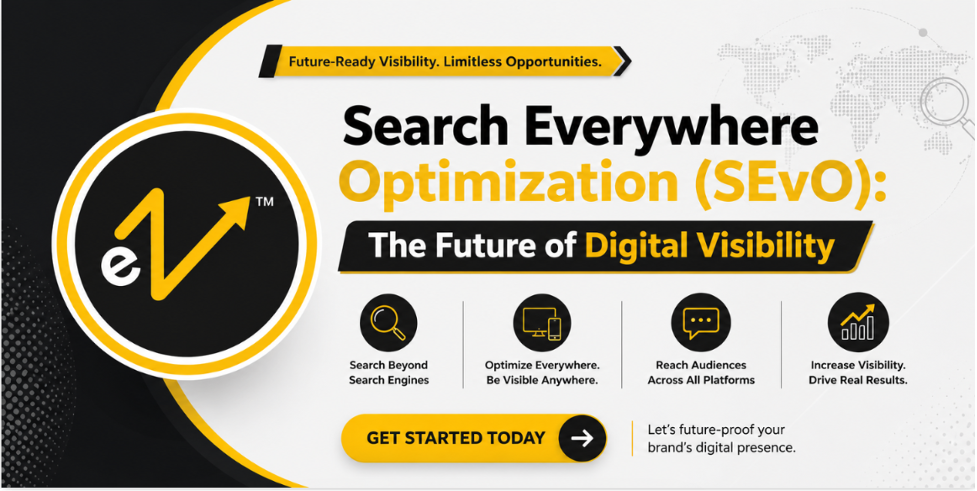
Nobody stops to think, “Which search engine should I use?” They search wherever feels easiest at the moment. That shift changes everything about how brands get found. It’s why a single-platform SEO strategy no longer cuts it, and why Search Everywhere Optimization has become the new standard. In this article, you’ll learn what SEvO is, why it matters now, its core pillars, how it differs from old-school SEO, and how to actually put it into practice.
The Evolution of Search
To understand where search is headed, it helps to see how far it’s come. Think of it in four phases. First came the search engine era. Google, Bing, and Yahoo ruled, and ranking on them was the entire job. Then social search arrived. People started hunting for answers on YouTube, Instagram, LinkedIn, TikTok, and Pinterest, treating each feed like its own search bar.
Next came AI search, and it moved fast. Suddenly buyers were asking ChatGPT, Gemini, Perplexity, Claude, and Microsoft Copilot for direct answers instead of scrolling links. And now we’ve reached the fourth phase: search everywhere. Discovery happens across search engines, AI assistants, social platforms, video platforms, communities, local search, ecommerce sites, and voice search, all at once. Each phase didn’t replace the last. It stacked on top. So today’s customer moves freely between all of them, often within a single decision.
What Is Search Everywhere Optimization?
So what does it actually mean? Search Everywhere Optimization is the practice of making your brand discoverable across every platform where customers search for information, products, or services. That’s the short version. The longer version matters more. SEvO is not here to replace SEO. Traditional search still drives a huge volume, and Google isn’t going anywhere soon.
Instead, SEvO expands the idea of SEO beyond the search engine box. It takes the same goal, being found by the right people at the right moment, and applies it everywhere that moment now happens. On AI assistants. In video feeds. Inside communities. On marketplaces. Wherever your customer looks, you want your brand to show up. That’s the whole point of thinking bigger than Google.
Why Search Everywhere Optimization Matters
Here’s why this can’t wait. Customer behavior has already changed, whether brands are ready or not. Instead of defaulting to Google, people now ask ChatGPT for recommendations. They watch YouTube to learn. They search Instagram for ideas and inspiration. They read Reddit for opinions they can trust. They browse LinkedIn to size up a company. They search Amazon when they’re ready to buy, and pull up Google Maps to find something nearby.
Some just ask Alexa or Siri and never touch a screen. Notice the pattern? Every platform has quietly become a search engine. So if your visibility strategy only covers Google, you’re missing most of the moments where decisions get made. SEvO closes that gap.
Core Pillars of Search Everywhere Optimization
AI & Conversational Search (GEO & AEO)
This is where a growing share of searches now begin. People ask ChatGPT, Gemini, or Perplexity a question and get one synthesized answer, often naming just a few brands. GEO, or generative engine optimization, helps you become one of those cited sources. AEO, answer engine optimization, structures your content so it gets pulled as the direct answer. Together they decide whether AI recommends you or a competitor. Clear formatting, real expertise, and consistent brand mentions are what earn that spot.
Social & Video Search
Social platforms stopped being just feeds. They’re search engines now. If someone wants to learn a skill, they search YouTube. They want product ideas, so they search Instagram or TikTok. That means your captions, titles, hashtags, and spoken words all matter for discovery. Short videos especially get surfaced when they answer a clear question fast. So optimize for the search bar inside each app, not only the algorithm. Show up when people type their question, and you catch them right at the moment of curiosity.
Community & Forum Visibility
People trust people, so they head to Reddit, Quora, and niche forums for honest answers. And AI tools lean on these communities heavily when they build responses. That gives forums double value. A helpful, genuine presence in the right threads shapes both human opinion and AI recommendations at the same time. The rule here is patience. Add value, answer questions, and skip the hard sell. Do it well, and your brand becomes the name people mention when someone asks for a suggestion.
Local Search
When someone searches “near me” or asks a voice assistant for the closest option, local visibility decides who wins. This is your Google Business Profile, your reviews, your maps presence, and consistent name, address, and phone details – the core of local SEO. Voice and mobile made local search bigger than ever, since people search on the move. For any business with a physical location or service area, showing up here is not optional. It’s often the difference between a call and a competitor’s call.
E-commerce & Marketplace Discovery
For anyone selling products, the search often starts on Amazon, not Google – which is why ecommerce SEO now means more than ranking on Google. Buyers skip straight to the marketplace, ready to compare and purchase. That makes marketplace optimization its own skill. Strong titles, clear images, honest reviews, and keyword-rich descriptions decide whether your product surfaces or sinks. And it’s not only Amazon. Etsy, eBay, app stores, and even Pinterest work the same way. If people buy your kind of product on a platform, you need to be findable there, ranked and ready.
Digital PR & Content Marketing
This pillar ties the rest together. When credible sites mention your brand, everything improves at once. You earn authority with Google, trust with AI systems, and awareness with real people. Digital PR gets your name into publications, roundups, and expert articles, the exact places both search engines and AI models look when deciding who to trust. Pair that with strong, helpful content of your own, and you build a web of mentions that follows customers wherever they search. Reputation, it turns out, travels everywhere.
How Search Everywhere Optimization Differs from Traditional SEO
Platform Diversity
Traditional SEO had one main target: Google. Get your rankings up there, and the job was mostly done. SEvO throws that single focus out. Now you’re optimizing for AI assistants, social feeds, video platforms, marketplaces, maps, and forums, each with its own rules. What works on YouTube won’t work on Reddit. What earns an AI citation differs from what ranks on Google. So the real shift is mindset. You stop thinking about one platform and start thinking about presence across many.
Search Intent & Behavior
On Google, intent was fairly predictable. People typed keywords and clicked results. Across all these new platforms, behavior gets messier and more human. Someone might ask an AI a full conversational question. They might search Instagram with a vague mood in mind, or scroll Reddit looking for reassurance more than facts. Each platform pulls a different intent out of the same person. So SEvO means understanding not just what people search, but how and why they search differently in each place.
Content Presentation
Want results like this for your business?
Talk to our SEO & AI visibility experts — no forms, no waiting.
Get a Free ProposalOld SEO rewarded one format that was a well-structured web page built for Google. SEvO demands range. AI tools want clear, quotable, well-organized answers. YouTube wants engaging videos. Instagram wants visuals. Reddit wants honest, plain-spoken text with no marketing gloss. The same core message has to wear different clothes on each platform. You can’t paste a blog post everywhere and hope it lands. Instead, you reshape the idea to fit how people actually consume content in that specific space.
Ranking Signals
Google’s signals were fairly well understood. Backlinks, keywords, technical health, and so on. SEvO widens the list considerably. Now brand mentions, community sentiment, video engagement, review quality, and how consistently your entity appears across the web all feed into visibility. AI systems especially reward trust signals over keyword tricks. So the work shifts from gaming one algorithm to earning genuine authority that many platforms, and many AI models, can all recognize and reward on their own terms.
Focus On Authority and Trustworthiness
Here’s the biggest shift of all. SEvO puts trust at the center. AI tools are careful not to spread bad information, so they favor sources they can verify. That means real expertise, named authors, credible mentions, and a consistent reputation matter more than ever. You can’t shortcut your way in with clever keywords. You earn visibility by genuinely being trustworthy, and by proving it across enough places that both people and machines believe you. Authority is the new currency.
How to Execute a Search Everywhere Optimization Strategy
Understand Customer Search Behaviour
Start with your customer, always. Before optimizing anything, learn how your specific audience actually searches. Do they ask AI tools first? Do they trust YouTube reviews? Do they lurk in a particular subreddit before buying? Different audiences behave in different ways, and guessing wastes effort. Talk to customers, read their questions, and watch where they spend time. Once you truly understand their search habits, every other step gets easier, because you’re building around real behavior instead of assumptions.
Identify Every Platform Your Audience Use
Next, map the terrain. List every platform where your audience searches, discovers, or decides. That might mean Google and ChatGPT, sure, but also YouTube, Instagram, Reddit, LinkedIn, Amazon, or a niche forum you’d never expect. Don’t assume. Check the data, and ask your customers directly. Some audiences live on TikTok while others never open it. The goal is a clear, honest picture of where attention actually sits, so you spend energy where it counts and skip the platforms that don’t matter.
Optimize Technical SEO
None of this works on a shaky foundation. Technical SEO still holds everything up. A fast, secure, well-structured website helps every other channel, because AI tools and search engines both need to crawl and understand your pages cleanly. So cover the basics well. Mobile-friendly design, quick load times, clean site structure, and proper schema markup. Think of it as the groundwork. Get it right, and your content stands a real chance of surfacing everywhere else that matters.
Implement AI SEO & GEO
Now optimize for the AI models answering questions. AI SEO and GEO help you appear inside ChatGPT, Perplexity, Gemini, and AI Overviews. The recipe is fairly clear. Write content that answers questions directly, structure it with clean headings, front-load your key points, and back claims with real substance. Make sure AI crawlers can reach your pages too. The brands that get cited tend to be clear, credible, and easy to parse. Give the models exactly what they need to recommend to you.
Strengthen Entity and Brand Authority
Search systems want to know who you are, clearly and consistently. That’s your entity. Strengthen it by keeping your brand details identical everywhere, from your website to your profiles to third-party listings. A solid Wikipedia presence, an active knowledge panel, and consistent mentions all help build LLM-level brand authority. The more coherent your brand looks across the web, the more confidently both Google and AI tools can identify and recommend you. Confusion hurts visibility. Clarity builds it. So tighten up your brand story until it reads the same everywhere.
Create Platform-Specific Content
One message, many shapes. That’s the mindset here. A single idea should be reworked to fit each platform instead of copied across all of them. Turn a blog into a punchy YouTube video, a carousel for Instagram, a plain-spoken Reddit comment, and a quotable answer for AI tools. Each version keeps the core point but fits how people consume content there. This takes more effort, no question. But platform-native content always outperforms recycled posts that clearly weren’t made for the space.
Build Digital PR and Citations
Reputation has to be earned out in the world, not just claimed on your own site. Digital PR gets your brand mentioned in publications, expert roundups, and industry articles. Those mentions do double duty. They build authority with search engines and feed the sources AI tools trust when they answer questions. Aim for genuine, credible coverage rather than spammy links. A single mention on a respected site can influence how you show up across Google and every major AI platform at once.
Optimize Video and Social Content
Video and social media deserve real attention, not leftovers. People search inside these apps constantly, so treat titles, descriptions, captions, and even spoken words as searchable text. Answer clear questions, use the words your audience actually types, and hook viewers in the first few seconds. On social, consistency beats perfection. Show up often, stay useful, and let familiarity build. Done right, your video and social content becomes a discovery engine of its own, catching people the moment their curiosity strikes.
Engage In Communities
Communities reward presence, not pitches. Reddit, Quora, Discord, and niche forums are where honest conversations happen, and where AI tools go looking for real answers. So show up as a genuine participant. Answer questions, share useful knowledge, and join discussions without dropping a sales link every time. It’s slow work, and that’s fine. Trust builds gradually. Over time, your brand becomes a familiar, helpful name in those spaces, which shapes both human decisions and the AI responses that pull from them.
Measure Performance Continuously
Finally, keep score, and keep adjusting. SEvO spreads across many platforms, so no single dashboard captures it all. Track your Google rankings, but also your AI citations, brand mentions, video views, community engagement, and branded search volume. Watch what’s growing and what’s flat. Then shift your effort toward what works. This landscape changes fast, so a set-and-forget approach fails. Treat measurement as ongoing, review it often, and let real results guide where you invest next. Constant tuning wins here.
The Future of Search Is Everywhere
Look ahead, and the direction is clear. Search is increasingly becoming ‘AI-first’, with more people beginning at a chatbot than a search bar. It’s also going multimodal, incorporating text, voice, image and video into a single search experience. The recommendations provided by AI will become even more personalized, depending on the history and preferences of each user. Soon agentic assistants will be working on our behalf, researching and even purchasing for us.
Zero-click experiences will keep rising, where answers arrive without a single link click. And entity-based search will reward brands with clear, consistent identities. All of these points are one way. Being visible everywhere stops being optional. That’s exactly why Search Everywhere Optimization is set to become a core marketing strategy, not a nice-to-have.
Conclusion
The takeaway is simple, even if the work isn’t. Search no longer lives in one place, so your visibility can’t either. Customers now discover brands across AI assistants, social feeds, videos, marketplaces, communities, and voice search, often all in one buying journey. Sticking to Google alone means missing most of those moments. Search Everywhere Optimization fixes that by putting your brand where your customers actually look, whichever platform that happens to be. It’s the natural next step for any business that wants to stay founded. At EZ Rankings – Performance marketing agency in India, we build these everywhere-strategies for brands ready to grow. Want to be visible wherever your customers search? Let’s make it happen. Talk to EZ Rankings today.

Mansi Rana
TEDx speaker and digital marketing expert with 22 years of experience driving business growth through innovation and strategy. Known for leadership rooted in both IQ and EQ, with a focus on ethical marketing and collaboration.
LinkedIn